A custom polo with your logo on the chest looks like one of the simplest things you can order, which is exactly why it goes wrong so often. The garment is familiar, so buyers rush the spec, and the problems only surface after a few hundred shirts are already boxed: the fabric puckers around the stitching, the size run leaves your two largest team members out, or the price came in double what a comparable shirt would have cost. None of these are bad luck. They are predictable mistakes, and every one of them is avoidable if you make the decision on purpose. Here are the ones worth heading off before you order custom polo shirts with a logo.
Mistake one: choosing the fabric to match the color, not the decoration
The most common error is picking a blank because the color looks right and ignoring how it takes a logo. Embroidery and knit structure interact more than people expect. A pique knit, the classic waffle-textured polo fabric that runs roughly 180 to 260 grams per square meter, has a stable surface that accepts a left-chest logo cleanly with a light tearaway backing. A smooth jersey knit looks sharp on the rack but stretches 15 to 25 percent, so it distorts under dense stitching and needs a permanent cutaway backing that adds bulk. If your design is embroidered, favor pique or a structured performance knit and be cautious with soft jersey.
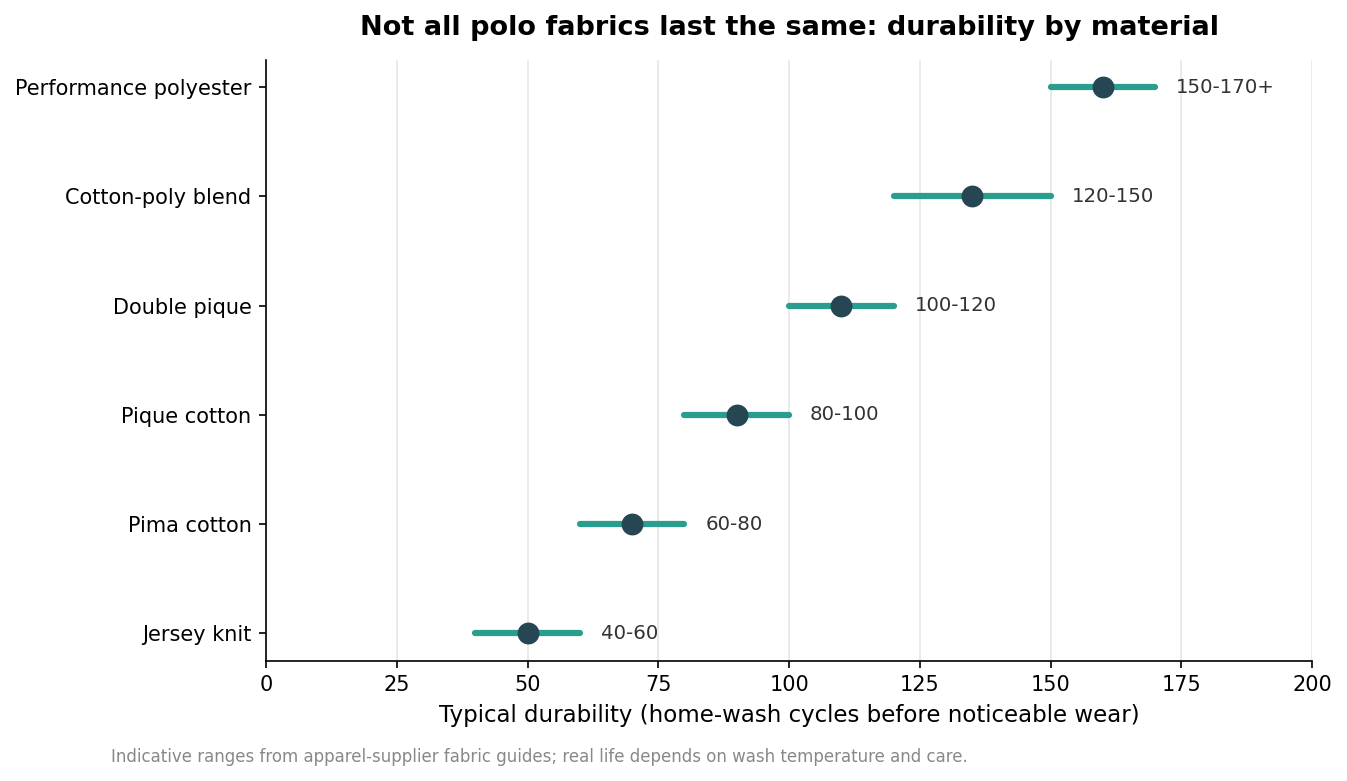
Fabric also decides how long the shirt survives a uniform program. Cotton-polyester blends and 100 percent performance polyester are built for heavy laundering and shrug off well over a hundred wash cycles, while premium pima cotton feels wonderful but pills sooner and costs the most per wear. Performance polyester matters most where sweat is in play: polyester absorbs only a fraction of a percent of its weight in moisture, against roughly seven percent for cotton, which is the whole reason golf and outdoor-crew polos lean synthetic. The chart below sketches how the common fabrics stack up on durability so you can weight feel against lifespan deliberately.
Mistake two: picking a style that does not cover your whole roster
Nothing derails a rollout like discovering the blank you chose stops at 3XL when two people need 4XL, or that there is no cut that fits the women on the team. Size range varies a lot between stock styles. A workhorse like the Port Authority K540 runs from XS all the way to 6XL, while performance options such as the Sport-Tek T474 and the Nike Dri-FIT NKDC1963 typically span XS to 4XL, and some premium styles like the Cutter & Buck MCK01168 stop at 3XL. Before you fall in love with a shirt, confirm it is offered in the full range your group needs, and check whether it comes in a separate ladies’ cut rather than assuming a unisex shirt will fit everyone comfortably. Deciding this up front is far cheaper than a second order in a different style that never quite matches the first.
Mistake three: underspecifying the logo itself
“Put our logo on it” is not a spec, and vagueness here shows up as fuzzy text and surprise fees. A standard left-chest logo lands around four inches wide and, in embroidery terms, commonly runs up to roughly 8,000 stitches; complex logos with small text or gradients push higher and can look muddy at chest size. There is usually a one-time digitizing fee, often in the neighborhood of 45 dollars, to convert your artwork into a stitch file, and it is charged once, not per shirt, so it stings least on larger orders. Decide early whether the job is truly embroidery or whether a printed method suits the art better, and pick thread colors that contrast with the garment so the mark actually reads from across a room. Send vector artwork and name your exact colors rather than leaving them to interpretation.
Mistake four: getting quantity, size distribution, and timing wrong
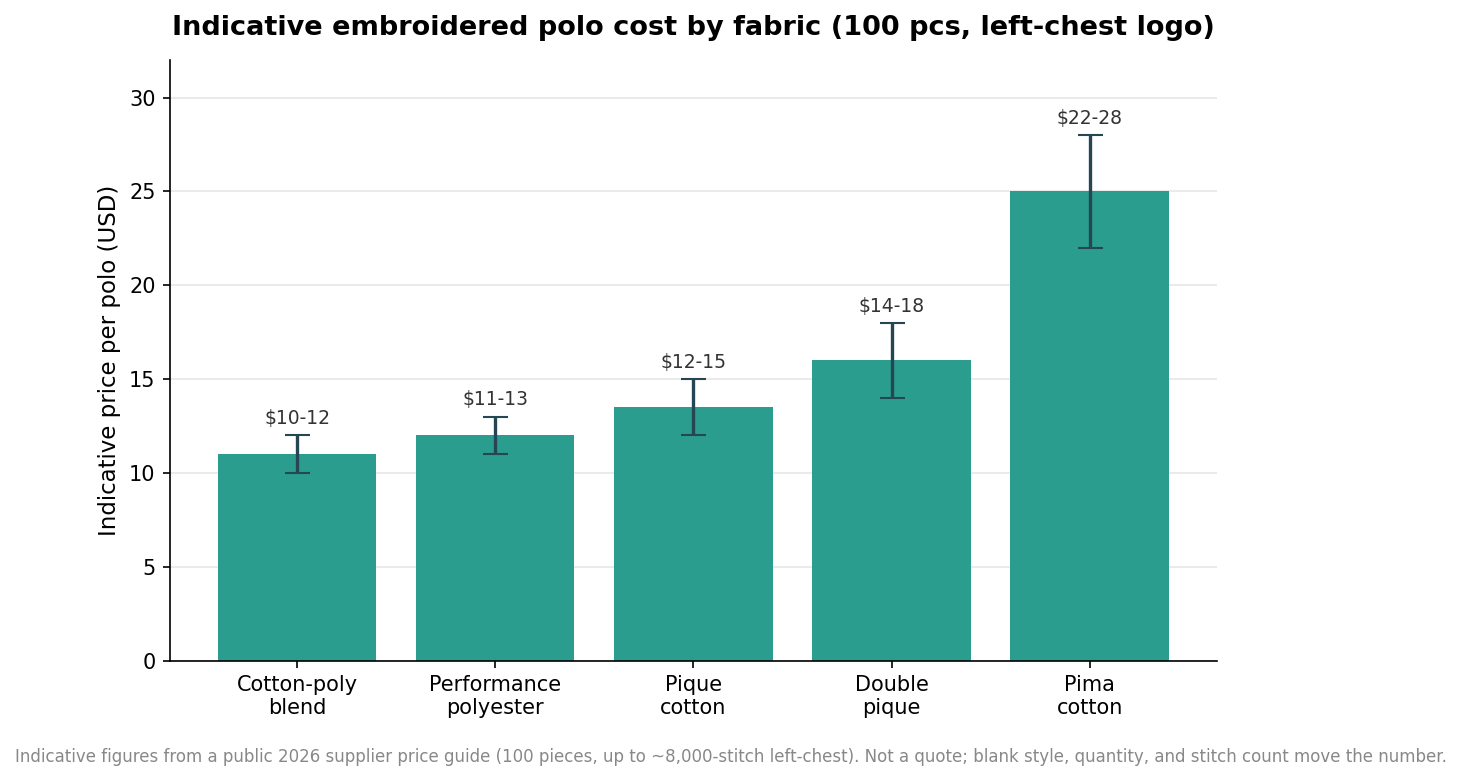
Two quantity mistakes cost real money. The first is ordering a flat size run, the same count of every size, when real rosters skew toward the middle; you end up short on large and mediums while a stack of XS gathers dust. Ask your group for actual sizes instead of guessing. The second is treating price as flat when it is anything but: decoration and blank costs both fall as volume climbs, so a handful of shirts carries a much higher per-piece cost than a full program run. The price chart below shows how the fabric choice alone moves the per-polo cost at a typical hundred-piece, left-chest order. Finally, build in time. Custom decoration is a production process, not a shelf pull, so leave a comfortable lead window before your event rather than paying for a rush you could have avoided.
Order it once, order it right
Every one of these mistakes traces back to the same habit: treating a custom polo like a stock purchase instead of a small manufacturing job. Choose a fabric that fits both your climate and your decoration method, confirm the style covers every size and cut your people need, hand over a real logo spec with contrasting colors and clean artwork, and collect true sizes so your quantity and run match reality. Spend the extra twenty minutes on the specification and the shirts arrive fitting, looking sharp, and costing what you expected, which is the whole point of ordering custom in the first place.
Leave a Reply