A polo that fits well and still looks sharp after fifty washes is mostly decided before the order is placed. Fabric gets most of the attention, but cut and construction are what determine whether a shirt flatters a range of body types, stays tucked, and keeps a crisp collar. When you are outfitting a whole team, those choices multiply across every person on the roster, so it pays to specify them deliberately rather than defaulting to whatever a supplier quotes first.
Pick one fit standard the whole roster can wear
Fit is the first fork in the road. A slim or tailored cut trims the body and sleeves for a modern look but leaves little room, which flatters some staff and frustrates others. A classic or standard fit adds several inches of ease through the chest, drapes cleanly over more body types, and is the safest single standard for a mixed group. A relaxed cut gives the most room and reads casual, which suits some work environments and looks sloppy in others.
The difference is not marketing language; it is measurable room. Slim cuts typically add only a couple of inches over the actual chest measurement, classic fits add roughly four to six, and relaxed cuts more still. If you standardize a whole team on a slim fit to match a few people, you will spend the savings on reorders for everyone the cut does not suit.
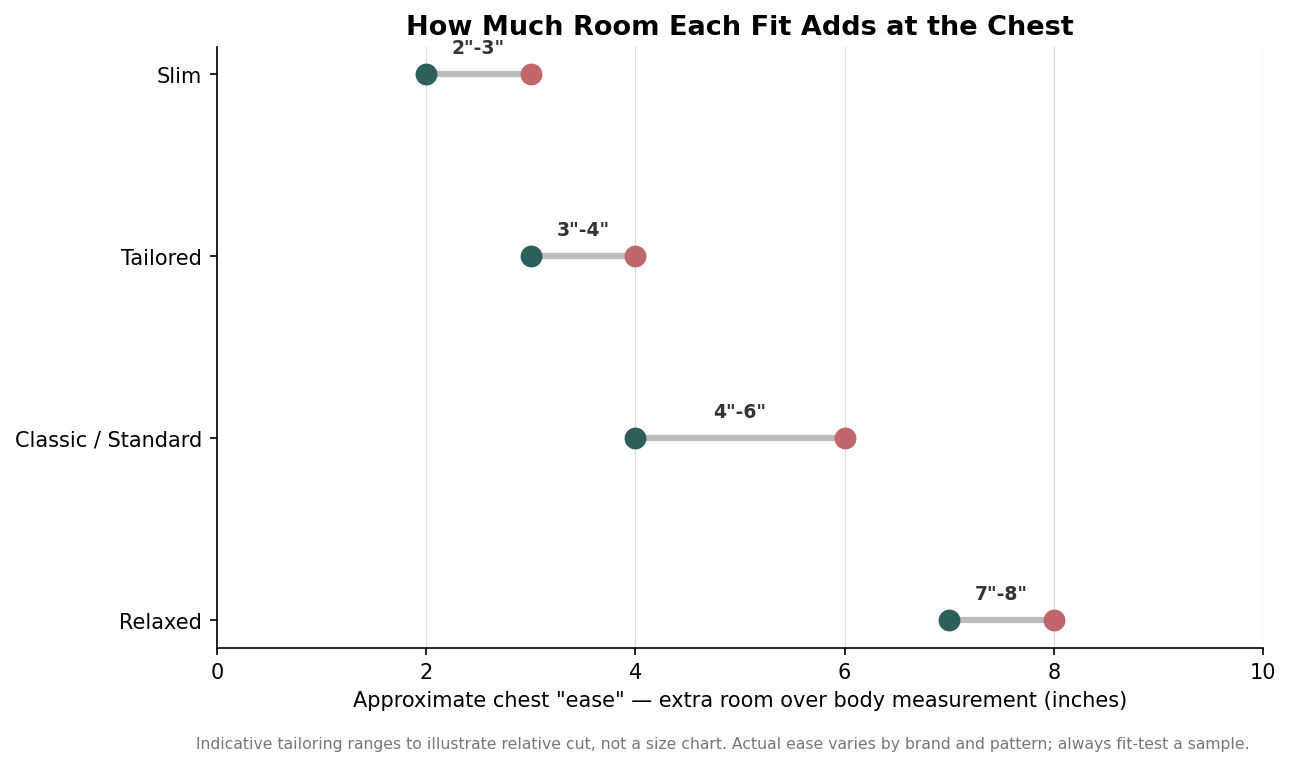
For most business, hospitality, and event programs, a classic fit ordered true to size is the least risky default. Reserve slim fits for customer-facing roles where a tailored look matters and you can size people individually, and treat relaxed cuts as a deliberate style choice rather than a fallback.
Don’t assume every style runs the same sizes
Two polos that look identical on a product page can offer very different size ranges, and that matters the moment someone on your team needs an XS or a 5XL. Value pique blanks such as the Port Authority K540 commonly run the full breadth from XS through 6XL, while many performance styles like the Sport-Tek T474 or a Nike Dri-FIT polo stop around 4XL, and some premium or fashion-leaning models such as the Cutter & Buck MCK01168 or AS Colour Chad start at S and top out at 3XL.
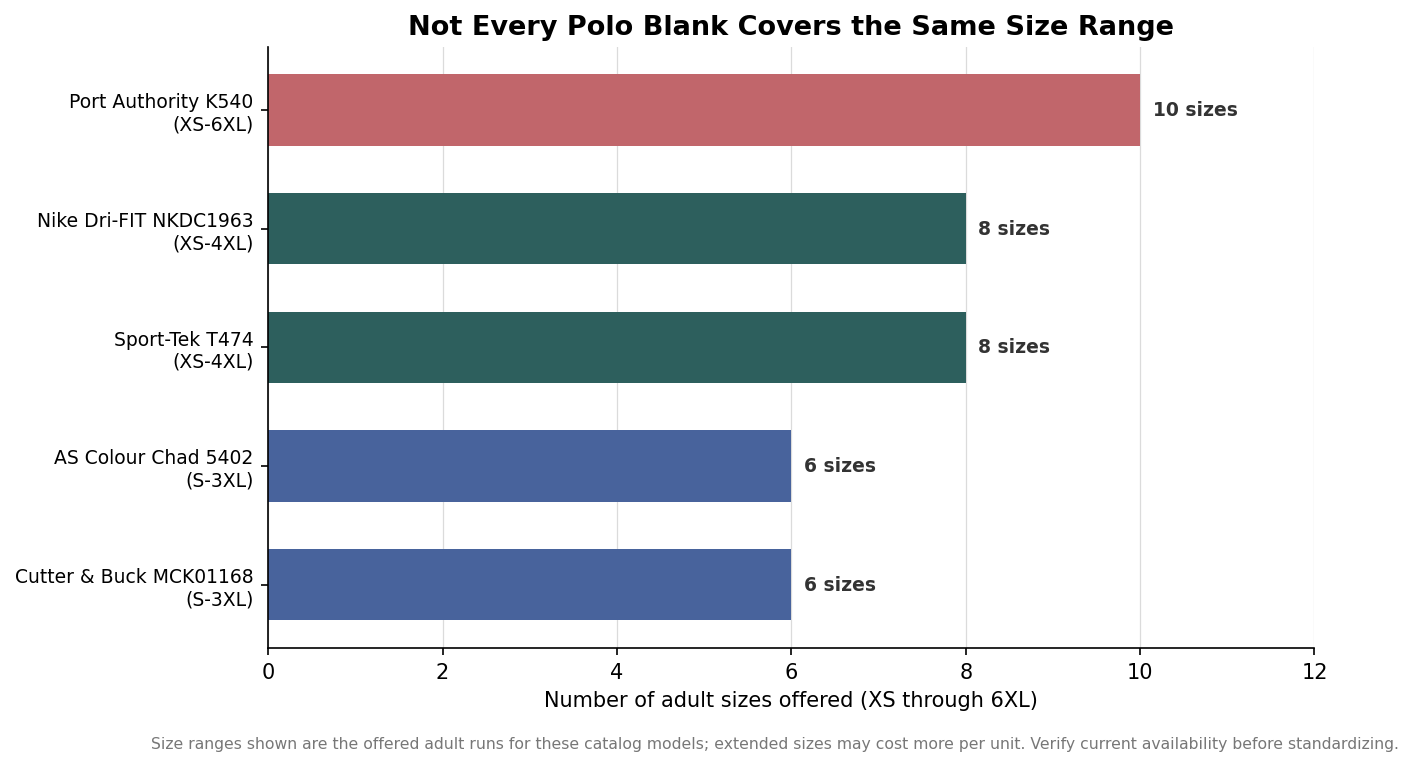
Before you standardize on a model, confirm it covers everyone you need to dress, and check whether extended sizes carry an upcharge, as they often do. Just as important, decide early whether you need women’s and youth cuts. A women’s contoured polo is shaped through the waist and cut with a different collar and placket, not simply a smaller men’s shirt, and forcing everyone into a unisex body is a common source of complaints. Ordering a men’s, women’s, and youth version of the same style keeps the branding consistent while letting each person wear something that actually fits.
The collar and placket decide how it ages
The fastest way to tell a cheap polo from a good one after a few months is the collar. A flat-knit rib collar is standard and durable, but a thin, loosely knit collar curls and wrinkles once it has been through a dryer a dozen times, and a curling collar makes an otherwise clean uniform look tired. Heavier knit collars, or self-fabric collars on premium styles, hold their shape longer. If the polos will be laundered hard or worn daily, spend a little more on collar quality rather than on a flashier logo.
The placket is both a fit and a branding decision. Men’s polos usually run a two- or three-button placket; women’s styles often use four buttons or a Y-placket. A clean, reinforced placket lies flat and gives embroidery a stable surface, while a flimsy one puckers around stitching. Buttons themselves vary from basic plastic to tonal or mother-of-pearl, and matching button color to the shirt reads more polished than a contrasting default. None of these choices is expensive on its own, but specifying them keeps a bulk run from looking generic.
Vents, tail, and sleeves for how it is worn
Whether a polo is meant to be tucked or left out should drive a few construction details. Side vents let the hem move and sit better untucked, while a fully closed side seam looks a touch more formal. A drop tail, where the back hem is cut longer than the front, is designed to stay tucked during movement, which matters for warehouse, kitchen, and active roles; a straight, even hem is built to be worn out. Sleeves follow the same logic: a ribbed knit cuff gives an athletic, gripped look, while an open hemmed sleeve is more relaxed. Body length should land around the hip so the shirt tucks without excess bunching, and sleeves should end partway down the upper arm rather than at or below the elbow.
Order a fit sample before you commit the run
The single best safeguard on a bulk polo order is a fit kit. Order one shirt in two or three sizes of your chosen model, put them on a few representative people, and confirm the cut, collar, and length before you place the full run. A sample costs a little time and one garment; a mis-specified order costs a reprint and a warehouse of shirts nobody wants to wear. Once you have confirmed a model, standardize on it across men’s, women’s, and youth versions so future reorders match, and record the exact style number, fit, and colorway so the next batch is identical. Where a figure or size range here is a general reference, verify the current spec for the specific model with your supplier before you standardize, since manufacturers update their lines.
Leave a Reply