The right number of custom polo shirts is your headcount multiplied by the shirts each person wears between laundry days, plus a small reserve for new hires and size swaps. Customized Polo Shirts accepts orders from a minimum of 12, sends a free mockup within 24 hours and ships in about 2 weeks, so you can order lean and top up later.
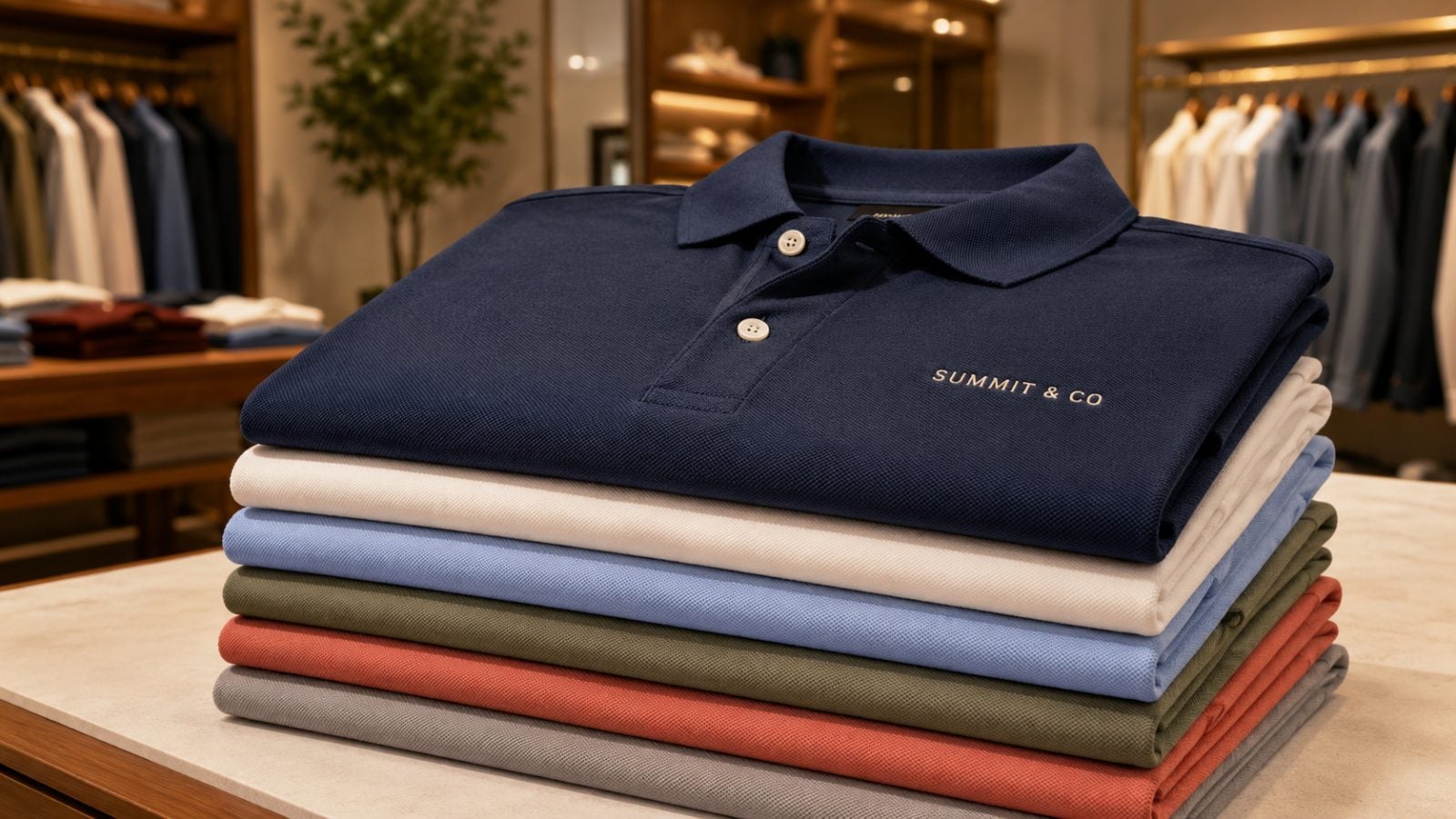
- Start from headcount times shirts per person, then add a reserve
- Minimum order is 12 polo shirts
- Free mockup within 24 hours, unlimited free revisions
- Standard turnaround is about 2 weeks; express shipping is available
- Pay nothing until you approve the design
How many custom polo shirts does each person actually need?
Each person needs enough custom polo shirts to get through a normal work cycle without washing a shirt overnight. For full-time staff in uniform every shift, that usually means a few polo shirts per person so one is being worn, one is in the wash and one is clean and ready. Part-time staff and occasional event crews can often manage with fewer.
Think about how the shirt is used, not just who wears it. A front-desk team in an air-conditioned office goes through polo shirts slowly. A landscaping crew, a kitchen team or a golf course staff in summer sweat through a shirt in one shift and need a fresh one daily, which raises the per-person count.
- Daily uniform wearers: plan enough polo shirts to cover the work week between laundry days.
- Part-time or rotating staff: plan fewer per person, but count every name on the roster, not just the people on today’s schedule.
- Event volunteers and trade-show crews: one polo shirt per person per event day is usually enough, plus a reserve for size swaps.
- Leadership and sales staff: consider a mix of short sleeve and long-sleeve polos for client meetings across seasons.
Write the per-person count down for each group before you request a quote. Customized Polo Shirts can then price the full run in one mockup instead of guessing.
How do you build a polo shirt quantity from headcount?
Build the quantity group by group: list each team, multiply its headcount by the polo shirts each person needs, then add a reserve. Doing the math by group matters because a restaurant floor team, a warehouse crew and a front office rarely need the same style or the same count.
- List every group that wears the shirt. Include part-timers, seasonal staff and managers who only wear a polo shirt at events.
- Pick a style per group. A classic pique polo suits office and retail staff, while a performance moisture-wicking polo suits outdoor and kitchen crews.
- Multiply headcount by shirts per person for each group.
- Add a reserve for new hires, damaged shirts and size exchanges.
- Check the total against the minimum of 12. Small teams sometimes round up to reach the minimum and keep the extras as spares.
Keep this worksheet. When you reorder, you can update the headcount column and send the same plan back to Customized Polo Shirts without starting over.
How many spare polo shirts should you keep in reserve?
Keep enough spare custom polo shirts to outfit the new hires you expect before your next order, plus a few in the sizes your team wears most. The reserve exists so a new employee can start in uniform on day one instead of waiting for the next production run.
Size the reserve to your hiring pattern rather than a fixed rule. A stable office team with low turnover needs only a handful of spares. A hospitality or retail business that hires through the year, or that brings on a seasonal crew, needs a deeper reserve weighted toward the middle sizes.
| Situation | Reserve approach |
|---|---|
| Stable office or sales team | A small reserve in the most common sizes |
| Restaurant, hotel or retail floor | A larger reserve across middle sizes to cover steady hiring |
| Seasonal crews and summer staff | Order the seasonal batch separately, timed before the season starts |
| Event and volunteer crews | A few extras in each size for last-minute sign-ups and swaps |
Spares also protect you if a shirt is lost, stained or damaged on the job. Store the reserve folded in a dry cupboard, sorted by size, so the next hire can be outfitted in minutes.
How should you split polo shirt quantities across sizes and fits?
Split the order using real sizes from your team, then add the reserve to the middle of the size range where most people fall. Guessing sizes from a typical distribution is the fastest way to end up with a box of unworn extra-large polo shirts and nothing for your next medium-sized hire.
Collect a size from every person before the order is final. For new teams, a quick form or a sizing session with sample shirts works better than asking people to remember their size, because polo shirt fit varies between styles.
- Count fits separately. If part of the team prefers a women’s fit polo, count those sizes as their own column rather than converting from unisex.
- Weight the reserve toward the middle sizes. New hires are most likely to need the sizes your current team wears most.
- Keep the extremes exact. Very small and very large sizes should match named people, not a reserve guess.
- Include family and youth programs. Schools, clubs and family events may need a kids polo count as a separate line.
Customized Polo Shirts shows each style and fit in the free mockup, so you can confirm the size split before anything is produced.
Is it better to order all your polo shirts at once or in batches?
Order one main run when your headcount and logo are settled, then add smaller top-up orders as the team grows. A single large run keeps every polo shirt identical and simplifies distribution, while staged batches stop you from paying up front for shirts that may sit in a cupboard for a year.
The best answer depends on how stable your team and branding are. If a rebrand, a new location or a new department is coming, order for the current team now and plan the next batch after the change. If the team and logo are stable, a single run with a sensible reserve is simpler.
| Approach | Works best when | Watch for |
|---|---|---|
| One main run | Headcount, logo and style are settled | Over-ordering sizes nobody wears |
| Main run plus top-ups | Steady hiring through the year | Allow about 2 weeks for each top-up |
| Seasonal batches | Summer or holiday staff, or a long-sleeve set for winter | Order before the season, not during it |
Each top-up order still needs to meet the minimum of 12, so it often makes sense to group several new hires and a reserve refresh into one reorder.
When should you place a polo shirt order so the quantity arrives in time?
Place the polo shirt order at least a few weeks before you need it: allow 24 hours for the free mockup, time for your team to approve it, and about 2 weeks of standard turnaround. Faster turnaround is available with express shipping when a deadline is tight.
Quantity planning and timing go together. If you are still collecting sizes, approve the design first and finalize the counts while the mockup is being revised, so the size list is the only open item. A late size list is one of the most common reasons a team order slips past an opening day, a tournament or a trade show.
- Set an internal deadline for size collection before you request the quote.
- Approve the mockup quickly; revisions are unlimited and free, but every round adds time.
- Remember that you pay nothing until you approve the design.
- Book the next top-up order before the reserve runs out, not after.
The how it works page walks through each step from quote request to delivery.
What quantity mistakes should you avoid on a polo shirt order?
The most common quantity mistakes on custom polo shirts are ordering from guessed sizes, forgetting part-time staff, and buying a large reserve right before a logo change. Each one leaves you with shirts nobody can wear or a team member without a uniform.
- Counting only today’s schedule. Use the full roster, including weekend and part-time staff.
- Ignoring style needs by role. Outdoor crews in a cotton pique polo may need more shirts per person than in a performance polo that dries faster.
- Skipping the reserve entirely. New hires then wait for the next production run.
- Overbuying before a change. If the logo, colors or a quarter-zip layering option are under review, order for current needs only.
- Losing the order record. Keep the style, colors, logo placement and size split so the reorder matches.
When you are ready, send your headcount, styles and size split through the custom quote form. Customized Polo Shirts replies with a free mockup within 24 hours, and you can adjust quantities until you approve.
Frequently asked questions
How many polo shirts does a full-time employee need for a work week?
Full-time employees who wear custom polo shirts every shift usually need enough to cover the days between laundry loads, so one shirt can be worn while others are washed and ready. Outdoor and kitchen staff often need more because they change shirts daily. Customized Polo Shirts can price separate counts for each team in one quote.
How do I estimate polo shirt quantities before everyone has given me a size?
Custom polo shirt quantities can be estimated from headcount first, then refined once sizes arrive. Approve the design and style while you collect sizes, so the size split is the only open item. Hold the reserve in the middle sizes until real sizes come in, then adjust the counts before giving final approval on the order.
Should seasonal staff get polo shirts from a separate order?
Seasonal staff are often best served by a separate custom polo shirt order timed a few weeks before the season begins. A separate run lets you match the seasonal headcount exactly instead of carrying extra shirts all year. Each seasonal order still needs at least 12 shirts and about 2 weeks of standard turnaround.
What should I do if my team grows after the polo shirt order ships?
Growing teams can draw new custom polo shirts from the reserve first, then place a top-up order when the reserve runs low. Keep the style, color, logo placement and size split from the original order on file. Customized Polo Shirts can use those details to prepare the follow-up mockup quickly, usually within 24 hours.
Where should spare polo shirts be stored between new hires?
Spare custom polo shirts keep best folded flat in a clean, dry cupboard, sorted by size and fit with labels on each stack. Avoid damp storerooms and direct sunlight, which can fade colors over time. A simple sign-out sheet helps managers see when the reserve is getting low and a reorder is due.
Do long-sleeve polo shirts need their own quantity count?
Long-sleeve custom polo shirts should be counted as a separate line, because not every person on the team will want or need them. Many businesses order a smaller long-sleeve set for cooler months, client-facing roles or outdoor winter work. Customized Polo Shirts can mock up short and long sleeve versions with the same logo placement.
How do I plan polo shirt quantities for an event volunteer crew?
Event volunteer crews usually need one custom polo shirt per person per event day, plus a few extras in common sizes for late sign-ups and size swaps. Collect sizes through the registration form so the counts are real. Order early enough to allow the 24-hour mockup, approval and about 2 weeks of production.
Should departments with different logos be counted as separate polo shirt orders?
Departments that use different logos or sub-brands should be counted as separate lines on the custom polo shirt quote, each with its own headcount and size split. Grouping them in one request keeps timing aligned. Customized Polo Shirts will show each logo version in the mockup so every department can approve its own design.
How far ahead should I start counting heads for a polo shirt order?
Headcount for a custom polo shirt order is best started a few weeks before you need the shirts, so size collection does not delay production. Set an internal deadline for names and sizes, request the quote, and approve the mockup. Standard turnaround is about 2 weeks after approval, with express shipping available for tight dates.
Can a reserve of polo shirts go out of date if we change our logo?
A reserve of custom polo shirts becomes unusable for uniforms if the logo, colors or brand name change, so keep the reserve modest when a rebrand is likely. Order for current staff plus a small buffer, then place a fresh order after the new artwork is final. Older shirts can still serve as volunteer or backup wear.
Why do outdoor crews often need more polo shirts per person than office staff?
Outdoor crews sweat through custom polo shirts faster, so they often change shirts daily and need a larger rotation than office staff. A performance moisture-wicking polo dries faster between washes, which can help keep the per-person count manageable. Customized Polo Shirts offers both cotton pique and performance styles in the same quote.
Get a free mockup for your polo shirts
Send your logo or idea and the quantity you have in mind. Customized Polo Shirts returns a free mockup within 24 hours, you approve the design before anything is produced, and standard turnaround is about two weeks with faster options available. Get a custom quote.