A polo blank’s spec sheet usually comes down to two phrases: a knit name and a weight, something like “100% cotton piqué, 200 GSM.” Most buyers skim past both and choose on color and price. That is a mistake, because those two figures predict more about how the finished shirt will look, wear, and take your logo than almost anything else on the page. Understanding the knit and the weight turns a wall of nearly identical polos into a short list you can defend.
This is a look under the surface of the fabric itself: what the common knits are, what grams per square meter actually measures, and how the two together should steer your decoration and your budget.
The knit is the structure, not the fiber
Cotton, polyester, and blends describe what the yarn is made of. The knit describes how that yarn is looped together, and it is the knit that gives a polo its hand and character. Four show up again and again. Piqué is the classic polo texture, a fine waffle-like surface created by a raised pattern that traps air, which is why it breathes well and hides light wrinkling. Jersey is the smooth, single-knit face of an ordinary t-shirt, softer and flatter than piqué and noticeably lighter. Interlock is a denser double-knit that is smooth on both sides, giving a substantial, almost silky feel. Rib is the stretchy, elastic knit you almost never see on a polo body; instead it reinforces the collar and cuffs so they snap back into shape after wear and washing.
Each knit behaves differently once it leaves the mill. The chart below summarizes how the three body knits stack up on the questions buyers actually raise, drawn from published fabric comparisons rather than lab tests. Read it as a map of trade-offs, not a scoreboard, because the right answer changes with the job.
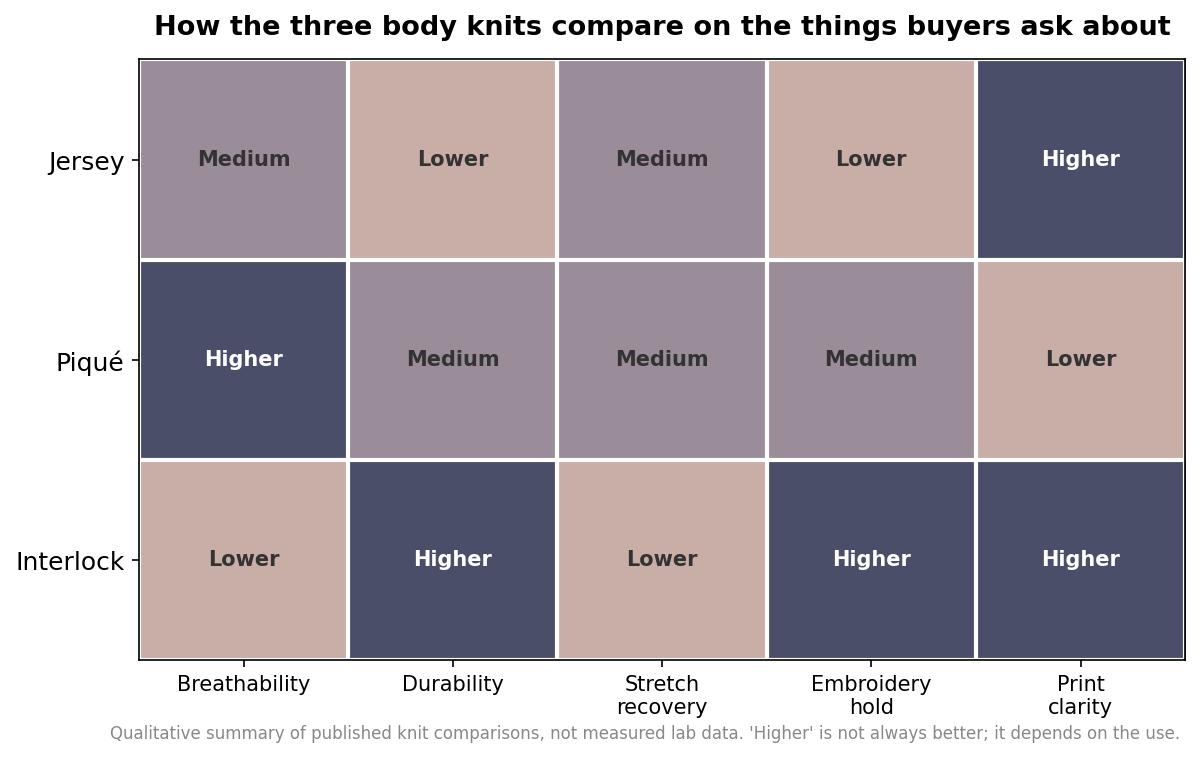
The pattern is consistent. Jersey prints beautifully and costs less but wears the fastest. Piqué breathes best and holds a stitched logo well, at the price of a textured surface that can fight fine printed detail. Interlock is the durable, premium-feeling option with an excellent surface for embroidery, though it traps a little more heat and recovers less from stretch.
What GSM tells you, and what it does not
GSM, grams per square meter, is simply how much a square meter of the fabric weighs. Higher GSM means more yarn per unit of area, which generally reads as thicker, more opaque, and more durable, and also warmer and less airy. It is the single most useful number for comparing two otherwise similar polos, because it cuts through marketing language: a shirt described as “premium heavyweight” at 175 GSM is lighter than a plainly labeled 210 GSM piqué.
The bands are worth memorizing roughly. Jersey polos tend to run lightest, around 160 to 190 GSM. Piqué sits in the middle, commonly 170 to 220 GSM, with the 180 to 200 range being the workhorse zone that balances stability, airflow, and stitch hold. Interlock trends heavier, roughly 180 to 230 GSM. Rib, used only for trims, is dense at 200 to 260 GSM to give collars their spring.
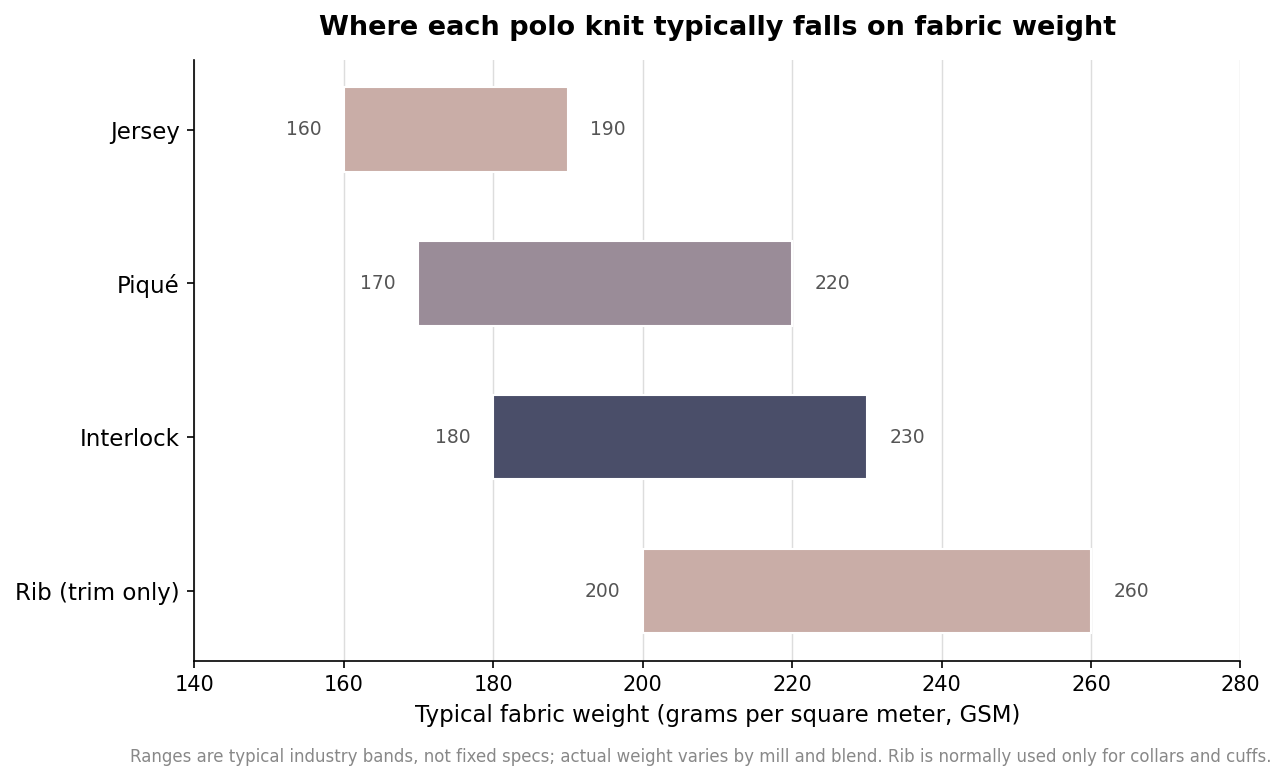
Weight is a trade-off, not a quality score. A heavier polo feels more premium in hand and survives more industrial washes, which matters for uniforms. But the same weight that reads as “quality” indoors becomes a liability for outdoor summer staff or athletic wear, where a lighter, more breathable piqué or a moisture-moving performance fabric is the better call. Do not chase the highest GSM by reflex; match it to where the shirt will be worn.
Matching the fabric to the job
Start from the environment and the wash cycle, then let those pick the knit and weight. For hospitality and retail staff who wear the shirt through a full shift indoors, a midweight piqué around 190 to 200 GSM is hard to beat: it looks tidy, resists wrinkles, and takes an embroidered logo cleanly. For sports teams, event giveaways, and anything worn in heat, a lighter jersey or an engineered performance fabric moves sweat and stays comfortable, and the lower weight also trims cost on large runs. For executive gifts, golf programs, and customer-facing premium wear, an interlock or a heavier piqué delivers the substantial feel people associate with a quality garment.
Real blanks map onto these tiers. Commonly specified decoration-ready styles include the Port Authority K540, a cotton-rich piqué that spans an unusually broad XS to 6XL size range for mixed teams; the Sport-Tek T474, a performance polyester built for athletic and outdoor use; the Nike Dri-FIT NKDC1963 for a branded performance option; and the Cutter and Buck MCK01168 at the premium end for golf and corporate gifting. Reading each one’s knit and weight, rather than its name, is what tells you which tier it truly belongs to.
The fabric decides your decoration
The knit and weight you choose quietly constrain how your logo should go on. Embroidery needs a stable, reasonably heavy surface to sit flat, which is why piqué and interlock take stitching so well and why a light jersey often needs backing to keep the design from puckering. Printing is the mirror image: a smooth jersey face is ideal for crisp printed detail, while piqué’s texture can slightly break up fine lines and small type. Heavier fabrics also carry the added weight of a dense embroidered crest without distorting, where a thin shirt can sag under the same stitch count.
The practical rule is to decide fabric and decoration together, not in sequence. If the brand asset is a detailed multicolor print, lean toward a smoother, lighter face. If it is a stitched logo meant to look sharp and last, choose a midweight or heavier knit with the structure to hold it. Committing to a fabric before you know how it will be decorated is how programs end up with a beautiful shirt that shows the logo poorly.
How to read a spec before you commit
When you compare two blanks, ignore the adjectives and find three facts: the fiber content, the knit, and the GSM. Those tell you how it will feel, how it will wear, and how it will decorate. Confirm the knit matches the use, check that the weight suits the climate and wash schedule rather than defaulting to the heaviest, and verify the surface fits your logo method before you approve a sample. Treat the published GSM and knit bands here as typical ranges rather than exact promises, since actual figures vary by mill and blend, and always judge the final decision on a physical sample in the exact fabric you intend to order. Do that, and the fabric stops being the part of the order you guessed at and becomes the part you got right.
Leave a Reply